The Bullshit Detector: How Viewers Know in 30 Seconds Whether You're Actually There
Here's a uncomfortable truth nobody in this industry talks about enough: your audience is smarter than your best camera angle.
They don't know they're doing it. They're not sitting there with a checklist. But somewhere in the first half-minute of your content, their nervous system is running a background scan — cross-referencing your eyes, your timing, your breath, your micro-expressions — and arriving at a verdict that determines whether they stick around or bounce. And once that verdict comes back "fake," there's almost no recovering from it.
This isn't a soft, feel-good conversation about "being yourself." This is about the actual neuroscience of human authenticity detection, and what it means practically for performers who want to build something real in this space.
Your Brain Is Wired to Catch Liars — And So Is Your Viewer's
Humans evolved as intensely social creatures in small groups where detecting deception was a survival skill. The result? We're walking lie detectors with a hardware-level ability to notice when someone's internal state doesn't match their external presentation.
Psychologists call the mismatch "leakage" — those involuntary micro-expressions, vocal hesitations, and physical tells that bleed through even the most polished performance. Paul Ekman's foundational research on facial action coding identified that genuine emotions produce muscle movements that are nearly impossible to fake consistently. A real smile engages the orbicularis oculi — the muscles around your eyes. A performed smile usually doesn't. Viewers can't name what they're seeing, but they feel it as a low-grade wrongness that makes them uncomfortable and disengaged.
In adult content, this effect is amplified. The genre is fundamentally about intimacy and presence. When those things are absent, the viewer doesn't just notice — they feel vaguely cheated, even if they can't articulate why.
The 30-Second Window That Decides Everything
Viewer retention data across streaming platforms consistently shows a brutal drop-off curve in the first thirty seconds of content. Some of that is format-driven — thumbnails that overpromise, intros that run too long. But a significant chunk of it is authenticity-driven, and it's the part most creators aren't addressing.
What are viewers actually processing in that window?
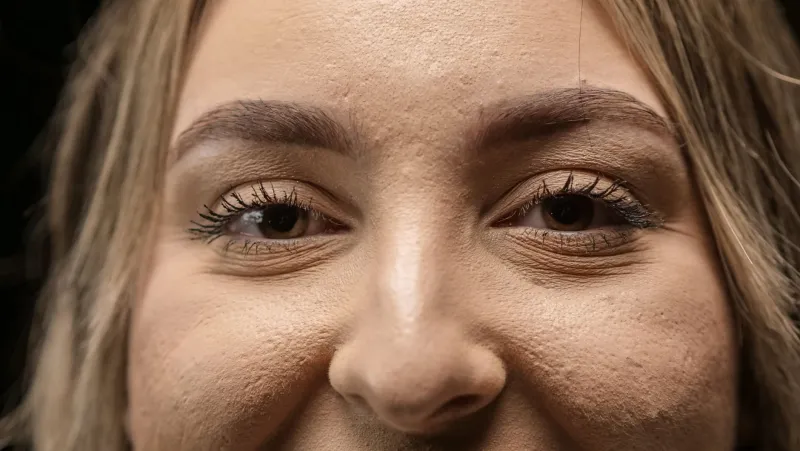
Eye behavior. Are you present in your own content? Genuine engagement shows in where your eyes go and how they move. Glazed, unfocused, or mechanically directed eye contact reads as absence. Viewers interpret it as boredom, discomfort, or straight-up checked-out energy — none of which makes them feel invited in.
Vocal authenticity. The human voice is an extraordinarily sensitive instrument for communicating internal states. Pitch, rhythm, breathiness, hesitation — all of it gets processed by listeners below the level of conscious thought. A voice performing an emotion it doesn't feel tends to be slightly too consistent, too controlled, missing the natural irregularities that signal genuine experience. It sounds like acting. Because it is.
Temporal congruence. Authentic responses have natural timing. Reactions that come a half-beat late, expressions that don't quite sync with what's happening — these register as off, even to viewers who couldn't explain what they're picking up on.
The Retention Math Nobody Wants to Do
Here's where this gets concrete. Platforms track average view duration, re-watch rates, and comment sentiment — and the performers who dominate those metrics aren't always the most conventionally attractive or the most technically polished. They're frequently the ones who generate a feeling of genuine connection.
That feeling has a downstream economic effect that compounds over time. A viewer who feels genuinely connected to a performer becomes a subscriber. A subscriber becomes a repeat buyer. A repeat buyer becomes an evangelist — someone who recommends your content organically, who shows up in your comments, who treats your page like a destination rather than a waypoint.
Phoned-in content can generate views. It almost never generates that kind of loyalty.
So What Does "Actually Being Present" Look Like in Practice?
This is the part where advice usually gets annoyingly vague. Let's not do that.
Presence in performance isn't a mood you manufacture — it's a state you prepare for. Professional performers across industries, from theater to athletics, have rituals that get them into a genuine state before they perform. Some of that is physical: breathing exercises, movement, getting the body out of its ambient stress patterns. Some of it is mental: clearing the noise, dropping the mental to-do list, actually arriving in the space you're about to occupy on camera.
For adult creators specifically, this also means being honest with yourself about your own comfort level with what you're creating. Discomfort leaks. If you're shooting something that doesn't genuinely interest you, that boredom or disconnection will show up in your performance no matter how technically competent you are. This is one of the strongest arguments for niching into content that actually engages you — not just because it's good brand strategy, but because it makes you a better performer by default.
Preparation rituals matter. Spend five to ten minutes before shooting doing something that gets you genuinely present — music, movement, conversation with a scene partner, whatever drops you out of logistics-brain and into your body.
Allow imperfection. Counterintuitively, trying too hard to perform perfectly creates the stilted, controlled quality that reads as fake. Viewers aren't looking for flawless — they're looking for real. A stumble, a laugh, an unscripted moment often does more for your connection with an audience than ten minutes of polished execution.
Watch your own content critically. This is uncomfortable but necessary. Look for the moments where your energy drops, where your eyes go somewhere else, where your timing feels mechanical. Those are your tells, and identifying them is the first step to addressing them.
The Long Game Always Goes to the Real Ones
The adult content space has never been more crowded, which means the performers who build durable, loyal audiences are the ones offering something that can't be easily replicated: genuine presence. You can copy a format, a niche, a production style. You cannot copy someone's authentic energy.
That's actually good news if you're willing to do the work of showing up for real. Because while everyone else is optimizing thumbnails and keyword-stuffing titles, the creators who are genuinely in the room — fully present, actually engaged, bringing their real selves to the camera — are quietly building something that algorithms can't manufacture and competitors can't steal.
Your audience's bullshit detector is always running. The move isn't to fool it. The move is to stop giving it anything to catch.